
Matej Sotník is an established Slovak producer whose production company guča films has already achieved many successes. He already took part in the Berlinale Forum section in 2023 with the project Notes from Eremocene, and this year his co-produced film If Pigeons Turned to Gold has made it into the same section. Together with the Czech production company CLAW, represented by Klára Mamojková and Wanda Kaprálová, they have already had several joint premieres: Action Item (d. Paula Ďurinová, 2025, Proxima Competition IFF Karlovy Vary, International Competition FIDMarseille) and the recent premiere of the short rap fairy-tale Orla (dir. Marie Lukáčová, 2026) in the Tiger Short Competition at the IFF Rotterdam.
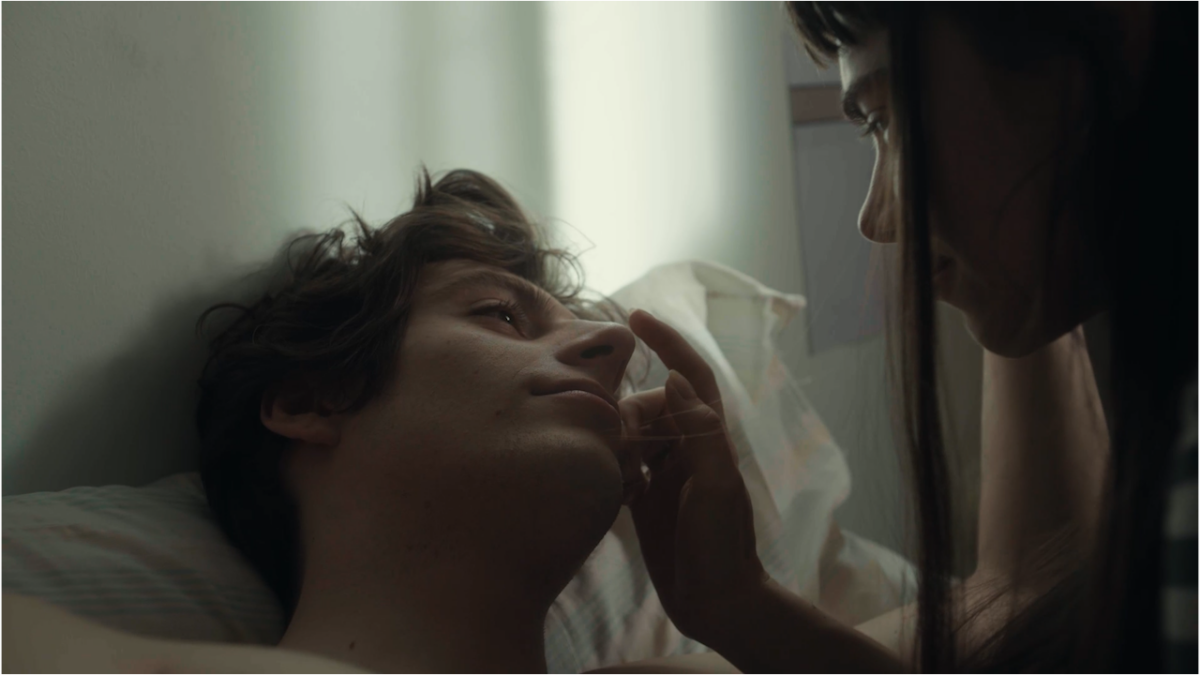
If Pigeons Turned to Gold is a very powerful personal statement. At what stage did you join the project as a co-producer? How long did the film take to make?
We joined Pepa Lubojacki’s feature debut in 2021. The following year, the project was supported by the Slovak Audiovisual Fund. Development and production together took approximately seven years. The length of the process was also due to the fact that from the very beginning it was a very delicate project, in which Pepa Lubojacki not only tells a deeply personal story in an emotionally penetrating way, but also had to invent a specific cinematic language for this kind of storytelling. We are pleased that the Slovak contribution to the film includes the music and sound design by Adam Matej, as well as the dramaturgy by Viera Čákanyová.
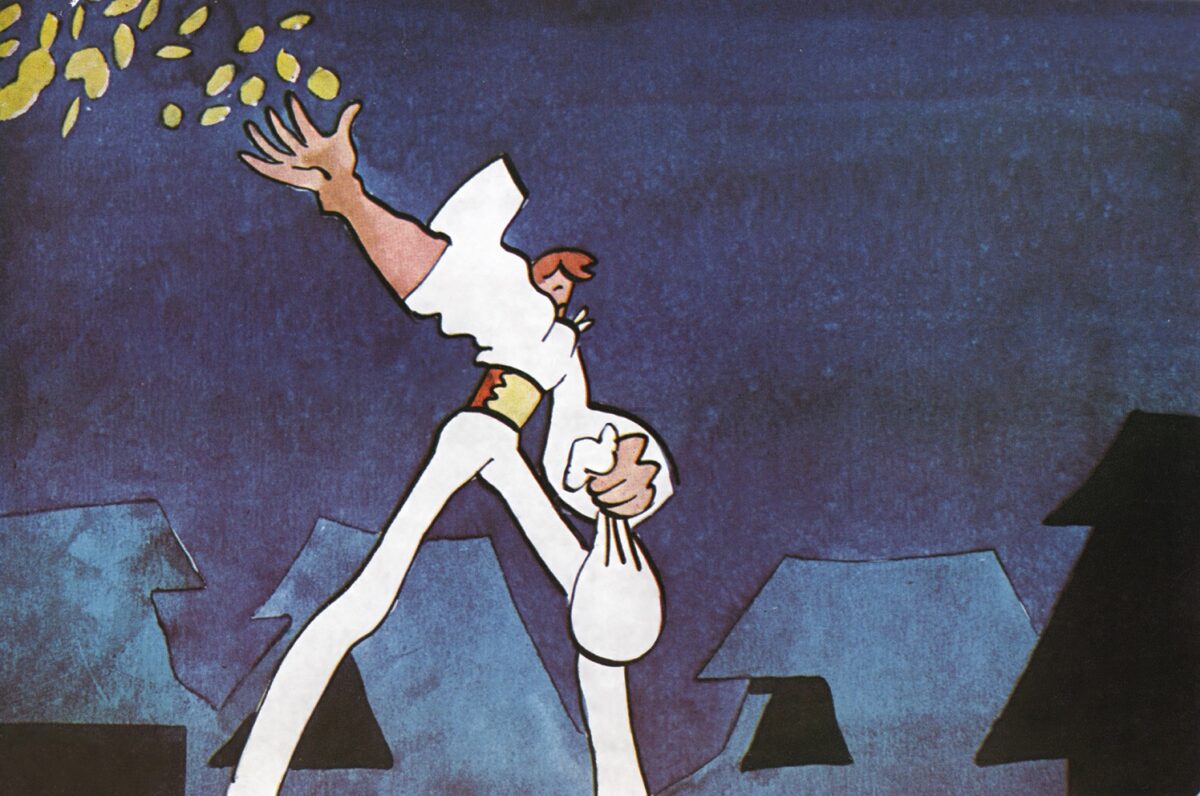
The film is a psychological dive into themes of anxiety, fear, love, self-love, and it illustrates the path of the director’s personal growth. For these purposes, it also uses a “know-how” segments explaining how the psyche works, as well as experimental elements including work with AI or the talking pigeon. Were these layers part of the project from the very beginning, or did they emerge gradually during the film’s development?
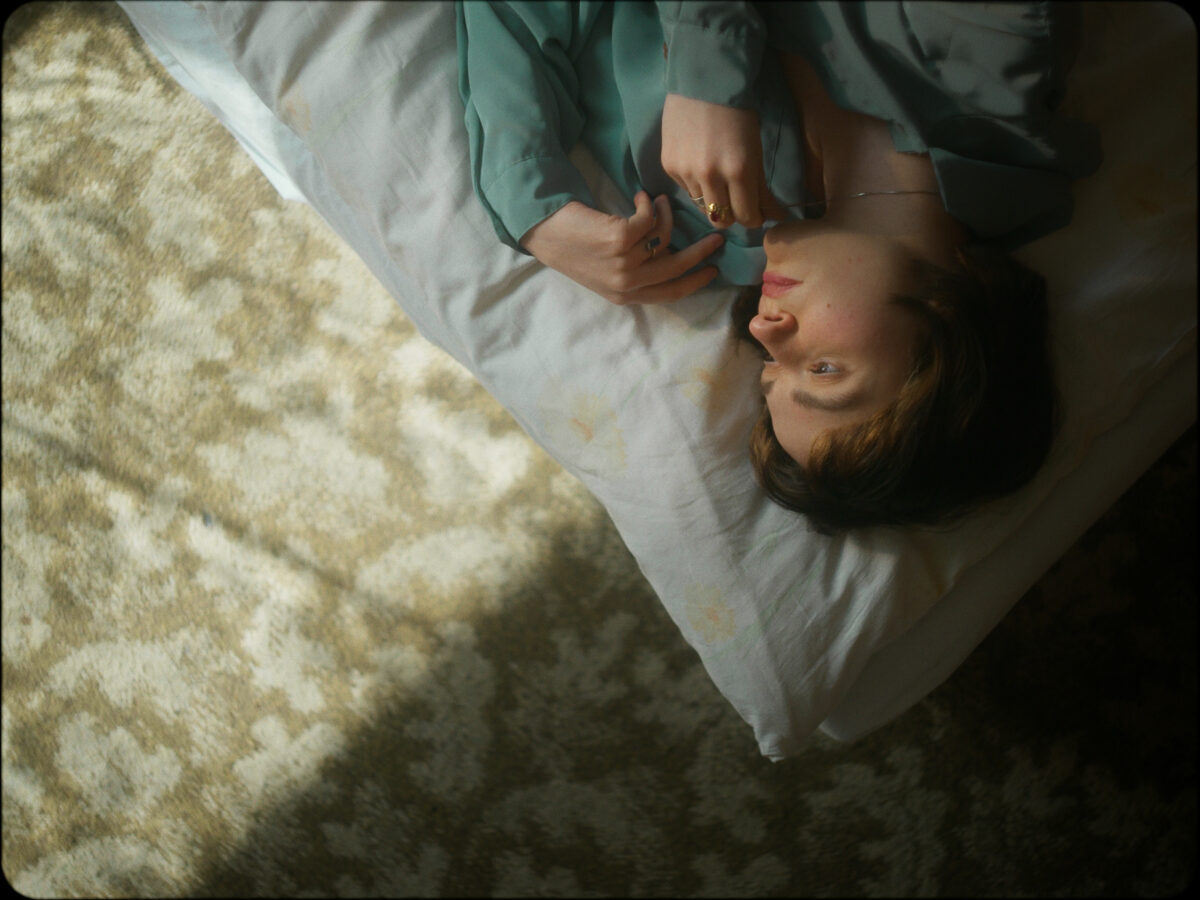
A large part of the film was shot on an iPhone, which allowed Pepa to get very close to the protagonists, their surroundings, and their intimate family situations. From hundreds of hours of footage, it was necessary to select and construct a form capable of offering a new perspective in itself. New possibilities of storytelling through the inclusion of AI and formally inventive approaches were therefore discovered only during the editing process. The editing, largely carried out by Pepa herself, was a challenge aimed not only at creating a socially important work, but also a formally transgressive form. With her debut, Pepa enters the European cinema as a very singular authorial voice from our region.
The film is not a direct critique of the social system, but rather points to the direct consequences of its dysfunction in people’s lives. At one point, the protagonist himself says that he would go to the rehab, but he knows it would have no effect, because as soon as he would leave, he would fall back into addiction. Isn’t this distrust in a (objectively poorly set up) system the primary problem?
More than a critique of the system, the film aims to be an empathetic attempt to understand specific human situations. It raises the question of how support can be structured in a more sensitive and long-term way. We want the viewer to perceive addiction as a complex problem that cannot be solved by a single intervention or simple solution, but through long-term support of mutual empathy and awareness that every person with addiction or without a home has many other qualities and values that make them worthy of respect and our attention.
Another layer of the film is that it points out a very tender and respectful relationship between siblings, their sense of belonging and love, even in an extremely difficult situation. Was this message also intentional?
The relationship between the siblings is an organic part of the film’s narrative. The film shows that even under extreme life conditions, respect, closeness, and care can exist—things that are many times not a given even in stable circumstances. This dimension emerged authentically from situations that Pepa documented over a long period of time, which is precisely why the film works in such a tactile way. It also reflects on how to approach our closest ones who struggle with addiction so that they feel our love and support, while at the same time we are able to set our own boundaries, because this is a very demanding process.
The team of the Czech production company CLAW is represented by two Slovak producers, and overall you form a very young Slovak production team—can we look forward to more co-productions between CLAW and guča films?
With the talented producers Klára Mamojková and Wanda Kaprálová, we are not only business partners, but above all long-time friends. Our collaboration is therefore a connection of professionals and close people, which I consider something very valuable. After years of work, our joint films are beginning to premiere at A-list festivals. Together with CLAW films, we are expecting world premieres of two more joint films in the coming year: the Slovak–Czech–Belgian–French–South African co-production World of Walls by director Lucia Kašová, with ARTE GEIE also on board, and the Canada-shot debut by Lumír Košař and David Ticháček, Thieves of Ashes, both currently in post-production. All of the mentioned films were supported by both the Slovak Audiovisual Fund and the Czech Audiovisual Fund.
The interview was conducted by Veronika Krejčová (National Cinematographic Centre of the SFI).

If Pigeons Turned to Gold
Berlinale Forum
Screenings:
Feb 13 | 13.00 | Zoo Palast 2 (World Premiere)
Feb 14 | 18.30 | Cubix 8
Feb 21 | 14.30 | Cinema Paris
Feb 22 | 10.30 | Cubix 8