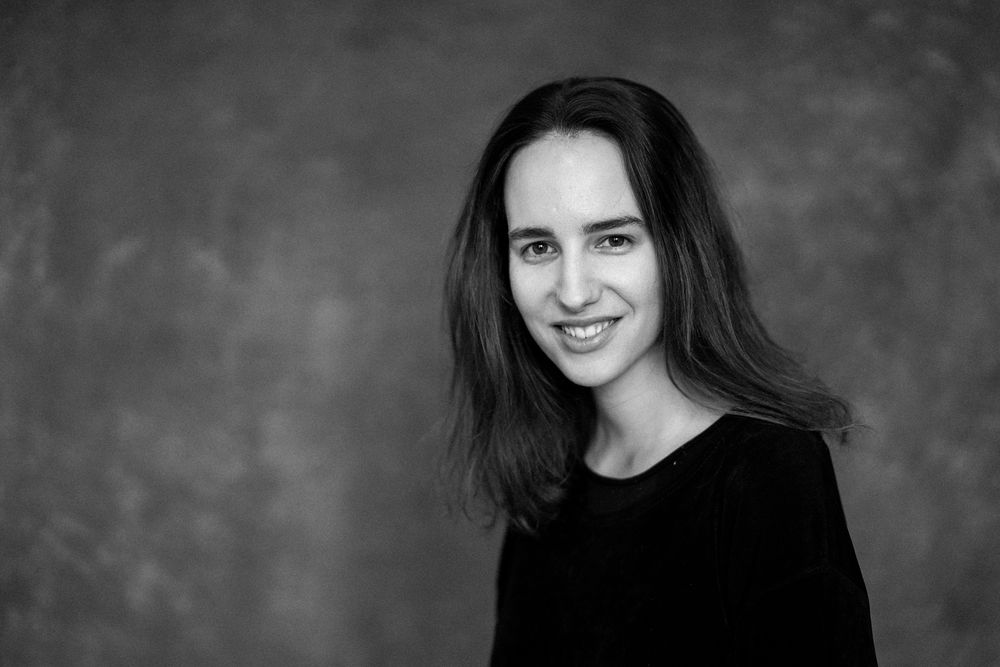
Screenwriter and director Martina Buchelová captivated the festival circuit with her short student films Green Line (2014) and Magic Moments (2016), which were presented at the Karlovy Vary IFF and the Toronto IFF, respectively. After making a trio of short documentaries about young people in Europe with Debora Pastirčáková, Swaggiest of the Swaggiest (2023), Graduates (2023), and Bosphorus Kid (2024), her feature-length debut Lover, Not a Fighter will have its world premiere in the Proxima Competition at the 60th edition of the Karlovy Vary IFF.
You have focused on the world of teenagers in several short films. What appeals to you about this world?
It’s a bit of a coincidence, all age groups appeal to me. The characters themselves are more important. Recently, I was thinking that the character I would like to be able to portray in a film in an interesting way is a woman around 50-60 years old, who always carries the same plastic bag – she takes care of her family, doesn’t give up, and remains a good person. They are often our aunts, mothers. Of course, men with a similar attitude (and with a plastic bag) are also interesting to me. In short, kind people in this strange world.
As for teenagers, I think that many filmmakers depict their stories because it is a turbulent age full of twists and turns and changes. People discover who they are, how they behave, whom they give a chance to, and how they want to live. They go through many changes and that’s interesting for the stories. In my projects, it wasn’t so much the age itself that mattered to me, I was more interested in specific characters who happened to be that age.
You have collaborated with Michaela Kostková, the actress who plays one of the main roles, several times – for example, in Magic Moments she and Mia Sofia Arpášová play sisters, which they did again in Lover, Not a Fighter. Did you write the script for her, or for the two of them? If I’m not mistaken, neither of them is a professional actress and they have appeared practically only in your films.
It’s not entirely like that – maybe a little bit. The main character in Lover, Not a Fighter is Andrej, a seemingly cheerful but in reality troubled young man who is searching for meaning in life. The main thing was to find Andrej. I wrote the character of Miša later. If the characters of Miša and Mia had developed in a way that did not suit these two non-professional actresses, I would not have cast them. However, as I was writing the characters, I felt that they could play those moments.
At the same time, since I already had experience of working with both of them and knew how talented they were and how much playfulness and kindness they could embody in a film, I subconsciously thought of them. I thought that I would have a slightly easier situation when filming my debut, because I already knew that I could rely on them. I also perceived the character of Adam, played by Adam Burčík, in the same way, since I had also worked with him before (Adam and Mia both went to the children’s theatre group Lano, where I met them). The characters are certainly not like our performers, but while writing I was thinking about whether they could play individual situations and for simplicity, I named them the same. In the end, it remained that way in the film.
The most important thing, however, was Andrej, and that the actor playing him would be a good match for Miša and the actress portraying her. And then that Mia connects with Miša, Adam connects with both Mia and Andrej… The casting was a complicated process and we had really very talented actresses and actors, but in the end, the character of Andrej, played by Adam Kubala, gelled the most with Michaela Kostková. And Mia Arpášová with Michaela and so on.
I was not looking for a romantic spark or attraction among the main characters during the casting. I think that as long as there is trust between the actors, affection can be “imitated” in the performance. I was looking for a natural friendship, respect, for each to be curious about the other’s opinions and understand each other’s humor. It was important that they were not ashamed of each other and could rely on each other in their performance. That’s what I felt most between Adam Kubala and Michaela Kostková.
As you have already mentioned, you have changed the perspective from your previous films – this time we’re watching the story through the male character. Why did you decide to do that?
Before writing the script for Lover, Not a Fighter, I studied materials and short stories by Slovak author Božena Slančíková Timrava because I had planned to adapt her works. It is a historical subject and although there are also very interesting male characters in it, the main emphasis is on women. To refresh my mind from the complex historical topic full of female characters, I started writing a contemporary story about a male character and today’s problems, essentialy as a contrast to Timrava. Originally, the script also included a lot of Internet, gifs, anything that expressed the emotion of the character from the present day.
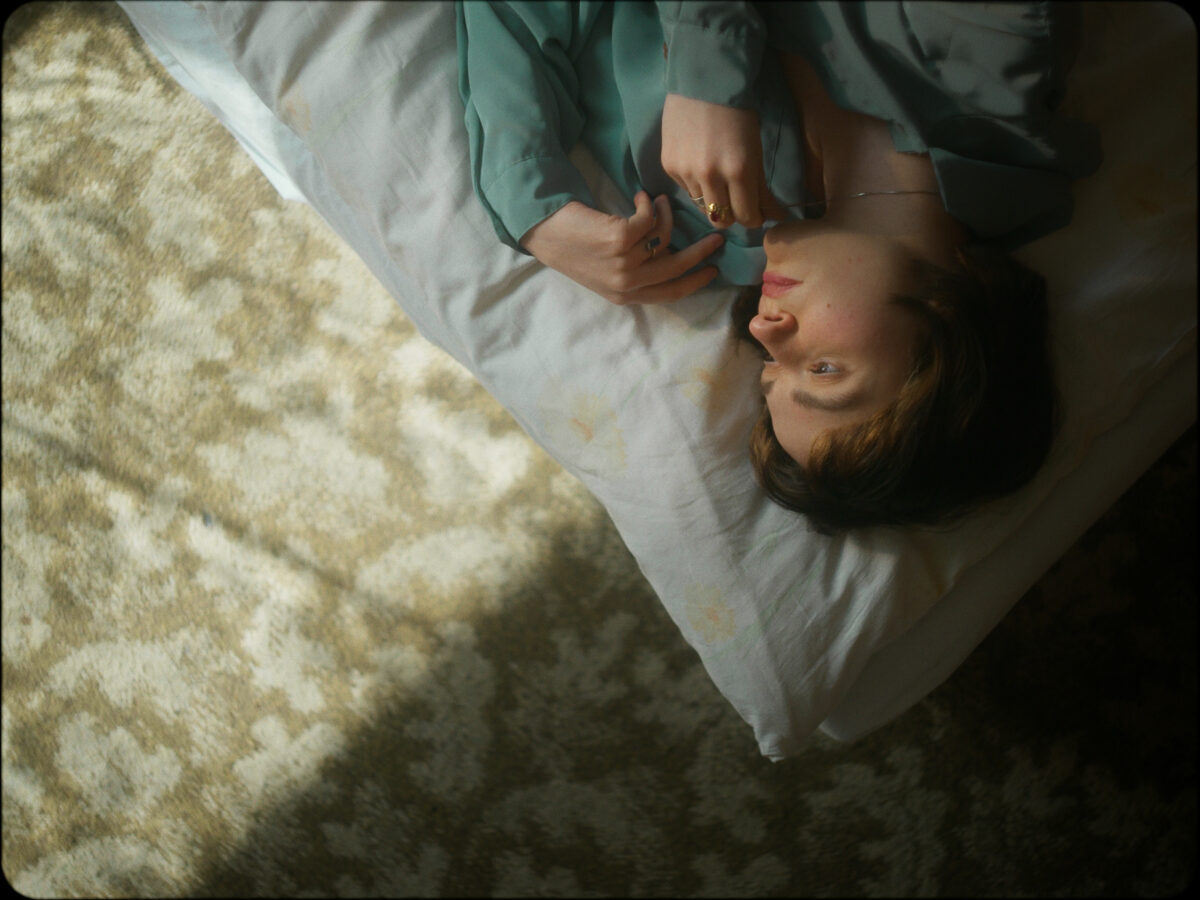
Since in my story inspired by Timrava’s novellas the characters went somewhere quite often, Andrej from Lover first appeared in my mind mainly lying in bed with a computer in his grandmother’s room, and looking like he was just hanging out. The audience was supposed to falsely think that about him. I wanted to show that this is not the case at all and that he is not as careless as he might seem. Finally, the producers from NINJA FILM and I decided that we would debut with a story about this boy and leave the historical topic of Timrava for later.
Although the main plot of the film is the relationship between Andrej and Miša, you also address topics such as alcoholism, grooming, and problematic or missing male role models. How important was it for you to address these issues?
Addiction is insidious, sad, and stupid. It is not easy to break free from it. However, Andrej is growing up and gradually realizes that he wants to have solid relationships, a home, and does not want to drink. He wants to solve his problems, because otherwise he will go crazy. Even though he may seem like the privileged son of affluent parents, he has to take care of the main things himself. Actually, like everyone else. When other people hurt you, it sucks, but the strangest thing is when you hurt yourself. And Andrej comes to terms with that in the film.
As for problematic or absent male role models, my primary goal was not to criticize weak male role models. At first, I had one character, then another character, then various situations, and finally a story that suddenly came to life, in which the other characters were naturally reflected as well. Almost every character, both male and female, does what they can and what they are capable of. Most people, in short, need to belong somewhere and to someone, but they get caught up in things they don’t want to be involved in. Everyone is a weak role model sometimes. Only the character of Kamil is a clear-cut swindler and speculator and there’s no helping him, but I would give the others a chance.
Andrej himself really tries to live in a way that allows him to be at peace with himself. Even when he messes up and perhaps even destroys something forever that he never intended to, he accepts his mistake, tries to move on, and deals with it. I respect him for that. There was originally a sentence in the script that didn’t end up in the film: “I would pity myself, but I’m not worth the pity.” Andrej doesn’t feel sorry, he tries to find meaning.
Despite these more serious themes, the film is full of tenderness and humor. How did you manage to balance the different moods?
In my head, it was very simple and clear, but the implementation was a challenge. A big thank you goes to the actors. The rehearsals were crucial, as we still had time to find the exact position of each character and situation. That’s when we were able to find the right balance even in difficult situations; we learned when to lighten up the story and when to be serious, what needed to be adjusted to make it work better. I had a fairly clear vision, but the acting rehearsals helped me as well.
Adam Kubala, who plays Andrej, quickly understood that his character uses all sorts of jokes only as a cover for the heaviness and strangeness of the world, and he was able to balance between these two positions. Adam works as a commercial director and has the ability to perceive things in a broader context, even incorporating details that do not only relate to acting into his performance. He was able to quickly understand what I meant and further develop my intention. Despite how difficult the filming was, it was a very interesting creative dialogue.
Michaela Kostková, who plays Miša, is herself an author with a clear worldview (she is a documentary photographer) and working with her was very smooth. She understood most of my intentions. She has a great sense of humor, but also seriousness and very good preparation for each scene. She helped maintain humor in the right moments and sadness in others and the overall feeling of the scenes. The same goes for František Beleš, Mia Arpášová, Adam Burčík – they are all people who understood the absurdity, seriousness, and humor in the individual situations and were able to balance it.
The actor who played Kamil, the director Jaro Vojtek, was great. We only had to meet a few times and we brought Kamil’s playfulness to the forefront. The character could have been unbearably annoying, because cunning is really very repetitive and annoying after a while, but Jaro always brought out some silliness like a child, which made Kamil charming.
I assume you had to work very precisely with the moods in the editing too.
The editing was crucial. In addition to telling the story and the emotions of the characters, we still had to be sensitive to moments when the audience should laugh and when they should take things seriously. If it were all just an over-the-top or just a tragedy, it would be much easier. Sometimes a few seconds more or a few seconds less was enough to change the mood of the scene in a way that we didn’t want. There are tragedies happening in the story, and we also witness frequent manipulation. Therefore, we had to be careful that the audience did not feel paralyzed by the manipulation, but rather that they laughed at it. So that they feel that they too have the opportunity to do something, not just accept the nonsense someone dictates to them. I hope that we succeeded to some extent. A big thank you and recognition goes to Marek Bihuň, the project’s main editor, and Katka Pavelková, who edited part of the film; they are great collaborators.
I would like the film to feel fresh to the audience, but it was a very difficult and demanding process and my collaborators were crucial. Sometimes people think that when a film feels authentic, the way we worked was largely a matter of chance or improvisation, which achieved the feeling of effortlessness, especially when it comes to acting. However, opposite is the truth. Everything is very carefully thought-out, prepared, and rehearsed. We improvised very little and if we did, then the actors knew exactly where they could go in their performance. We even rehearsed the eye movement and gaze with Adam Kubala. That effortlessness is quite hard-earned.
The film is also interesting because it often changes and contains many twists and turns. How did you develop this way of storytelling?
Before I wrote the overall story, I noted down various situations for about 2-3 years. Usually something came to me precisely when I got stuck in another project and the aforementioned twists and turns also came naturally. The situations had a certain lightness, because I was to some extent entertaining or comforting myself with them. It was not just a means of entertainment, I always had somewhere in my head that I would like to make this film one day. The situations and all the characters were not fixed yet, but I felt that they belonged to the same world – the world of this story. And then I put it together. There was a lot of source material, and in the end I also had to cut a lot of storylines – the grandmother had a suitor; Andrej was meeting neglected children at the playground at night; the man with the pit bull, the blonde, and the member of the imaginary boyband had more elaborate arcs; and the character of the local investigative journalist Pavel was also cut.
In 2015, you screened one of your first short films, Green Line, in Karlovy Vary, and this year you are returning to the festival with your feature-length debut. What does that mean to you?
Karlovy Vary was the first major festival I attended, and the Future Frames programme gave me a perspective that helped me a lot at that point. On the one hand, we saw the more business side of film, but most of all, I experienced the audience’s reactions and how even a simple school exercise could touch them. I also met other filmmakers of a similar age from different parts of Europe, and we were able to compare our ways of telling stories, working, and our plans for the future. Several people from our first year won awards at the biggest A-list festivals, while others no longer make films. It was also interesting that one participant screened a €60,000 film shot on a sailboat, while I screened a third-year exercise from the Film and Television Faculty at the Academy of Performing Arts with a budget of €250 shot in the Petržalka forest park.
When producers Michaela Kaliska and Erika Paulinská and I were deciding whether to make this film, our intention was to debut, to try and experience the entire process with a film that we would enjoy creating and could identify with. At the same time, we wanted to add a romantic storyline to the film and see if the theme of love would attract audiences to the cinema. And we wanted to make the film in a creative way and with collaborators we trust. We were not thinking about getting to the best festivals; that wasn’t our main goal. The fact that we got to an A-list festival – and to Karlovy Vary on top of that – is therefore great. I am very happy that Lover, Not a Fighter will be there, and I hope it will also help the film reach audiences, especially in Slovakia and the Czech Republic.
The interview was conducted by Tomáš Hudák (National Cinematographic Centre of the SFI).
Photo: Peter Frolo
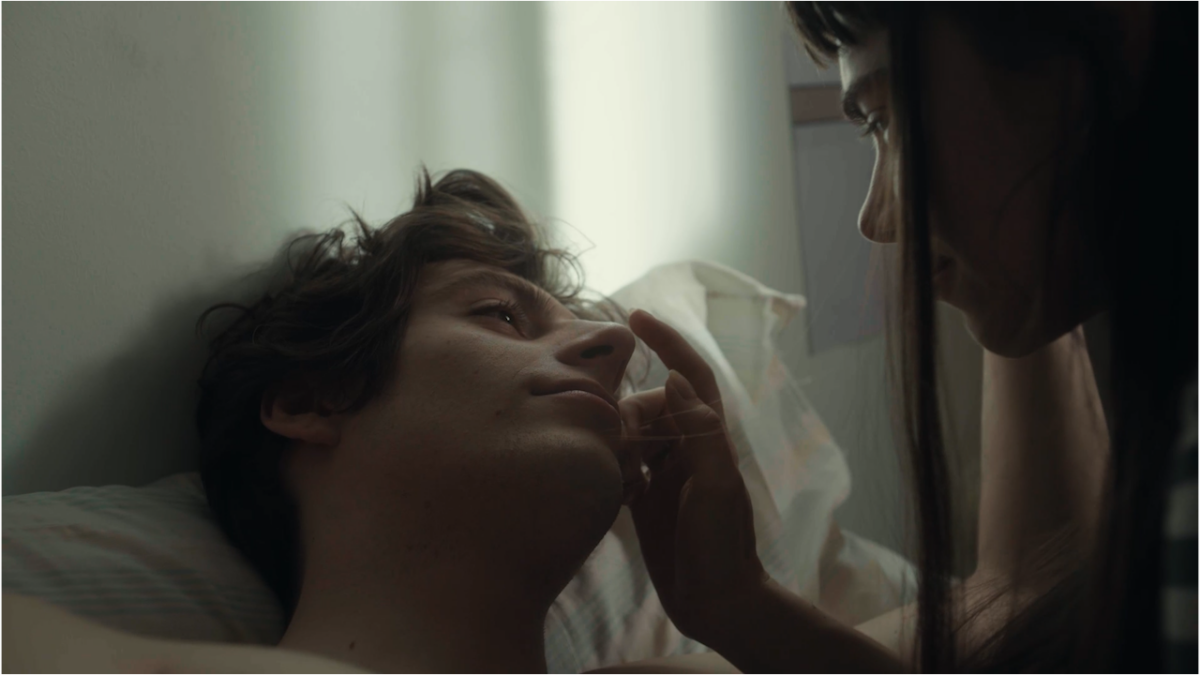
Lover, Not a Fighter
Proxima Competition
Screenings:
July 5 | 16:00 | Cinema C (Press & Industry)
July 6 | 19:00 | Karlovy Vary Theatre (world premiere)
July 7 | 15:00 | Cas Cinema
July 8 | 13:00 | Lazne III
July 9 | 14:00 | Cinema B