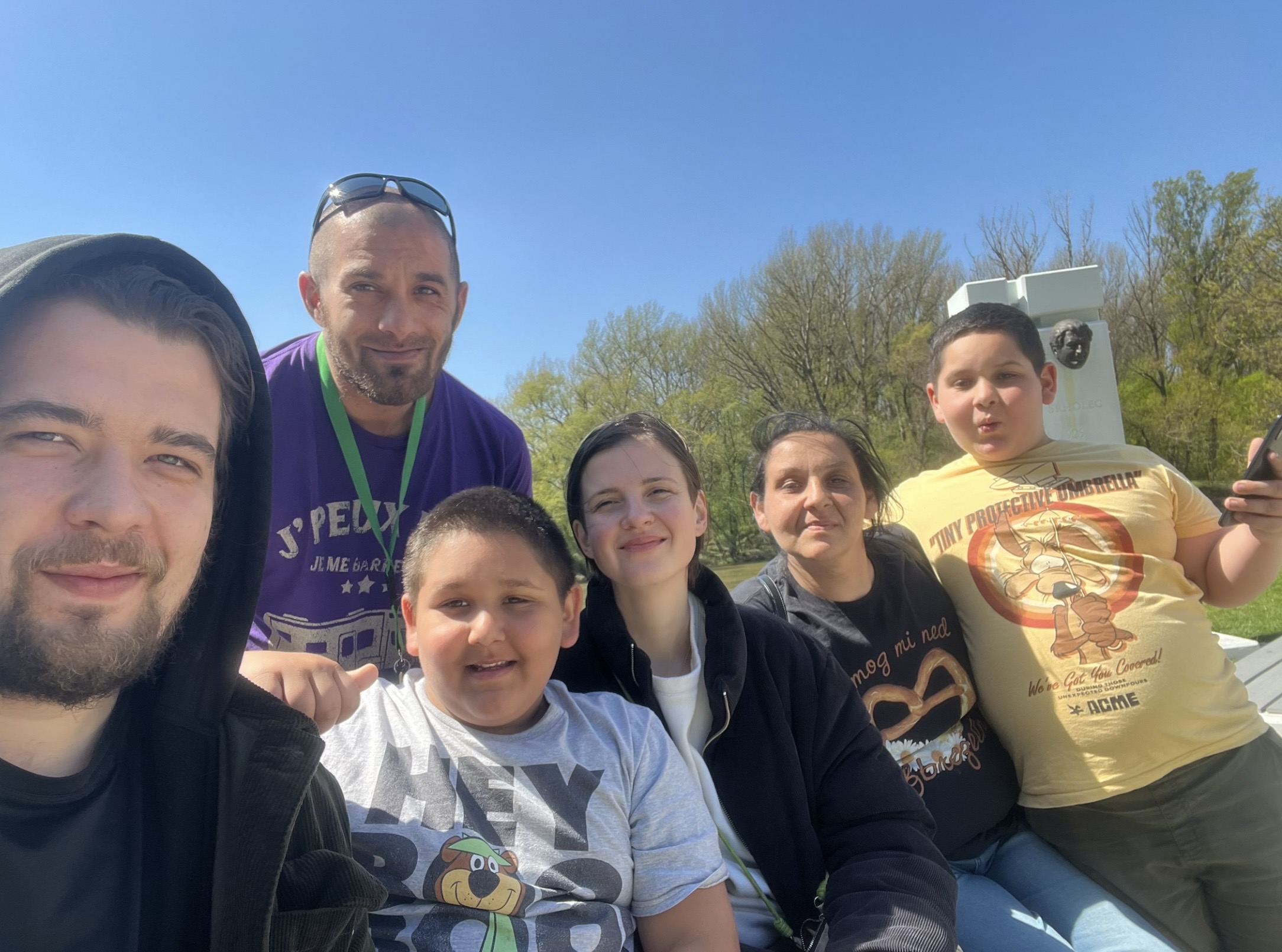
Director and screenwriter Anna Domček studied screenwriting at the Film and Television Faculty of the Academy of Performing Arts in Bratislava. She is active in the non-profit organization FILMSTORY, for which she has written several short fiction films and directed the short drama Magda (2024). Together with her husband and co-director Šimon Domček, she will discuss their feature-length fiction debut 33 Steps, which will have its world premiere in the Proxima Competition at the 60th Karlovy Vary IFF. Produced by the Slovak company escadra (read our interview with Slovak producer Ivan Ostrochovský here) and the Czech company endorfilm, the thriller is based on the eponymous documentary that Šimon Domček made as his bachelor’s graduation project at the Department of Directing Documentary at the above-mentioned faculty.
Your film is based on a true story: it follows Milan Daniel, a Romani man who was brutally attacked by skinheads when he was eighteen years old. As a result, he fell into a coma and experienced clinical death. More than ten years after the attack, he learns that one of the perpetrators, Erik, is being released from prison and returning to Břeclav (Czechia). What drew you to Milan Daniel’s story, and why did you decide to tell it?
Anna Domček: Milan himself drew us, his scar, his poetic way of speaking, his character. We wanted his story to have a voice, so that what had happened to him would not remain unspoken. The challenge of finding a form for a story that was not our own carried us through all the difficulties of making the film. We felt a responsibility both toward Milan personally and toward the experience he had gone through.
Šimon Domček: We have always admired writers of the American South –William Faulkner, Flannery O’Connor, and, for me personally, Truman Capote. They wrote stories observed from life that deliberately resisted interpretation. They did not write in order to illustrate a particular theme. On the contrary, their stories were so vivid and contradictory that they defied thematic reduction. At the same time, they were documentarians who did not moralize but tried to better understand the mechanisms of the world through the creative process. They were able to write stories in which our usual moral framework ceases to function, leaving only love – a Protestant love of grace, a certain kind of all-encompassing understanding. Put simply, we are drawn to stories that are not so much about a theme as they are about human weakness and fragility, which we all feel, and the mistakes that arise from them. Simply put, we become profoundly more sensitive to one another.
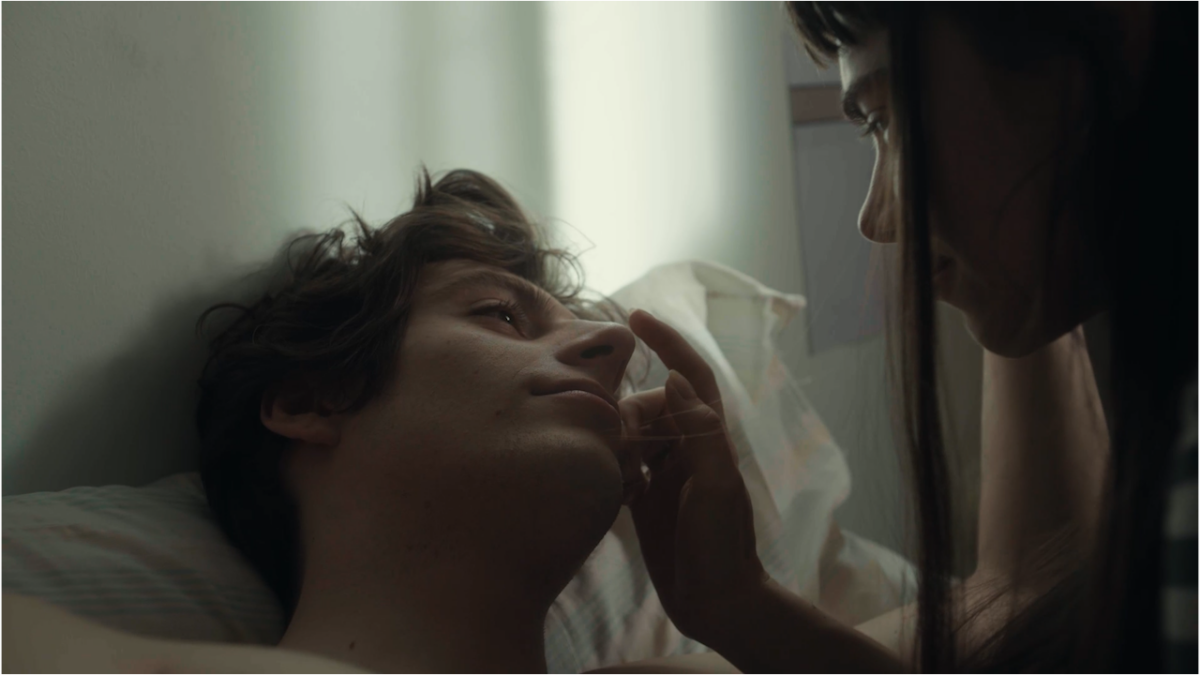
The film is your shared feature-length fiction debut; however, since it is based on Šimon’s bachelor’s documentary, it combines the approaches of both forms. You work with professional actors alongside non-professionals (often filmed in close-up), shoot in real locations, yet also stylize the film through its “arthouse” 5:4 aspect ratio, sound design, and striking use of colour, particularly in the night and dream sequences, which evoke thriller conventions. What possibilities did this blending of documentary and fiction offer you, and how did you achieve authentic performances from protagonists playing themselves?
Both: We wanted to make a film with a structured screenplay and, within the possibilities of the particular story, to come close to classical storytelling, with a beginning, an ending, and turning points. We were inspired by real events, but we wanted to make a fiction film. We did not work with written dialogue. The production method itself also shaped the result – we did not have twenty consecutive twelve-hour shooting days. We visited the family with a very small crew, reduced to the absolute minimum, for only a few hours a day. Longer shoots, because of the main protagonist’s health condition, were often not possible. Sometimes we captured a scene, sometimes an image. These initial limitations ultimately contributed to a form that would not have been possible within a different production system. John Cassavetes’ acting method was also a good tool.
You portray a Romani family from a lower socio-economic background, a group that filmmakers often depict stereotypically. Yet your film avoids romanticizing poverty, and the protagonists come across as very natural. You also touch on the subject of mental health, suggesting that Milan Daniel’s behaviour, which negatively affects his son Mili, may be the result of post-traumatic stress disorder. Was it your conscious intention to portray a Romani family without relying on established clichés?
Both: Yes, absolutely. Thank you, you summed it up perfectly.
Milan Daniel plays himself in the film. What was your collaboration with him like, was he satisfied with the final result?
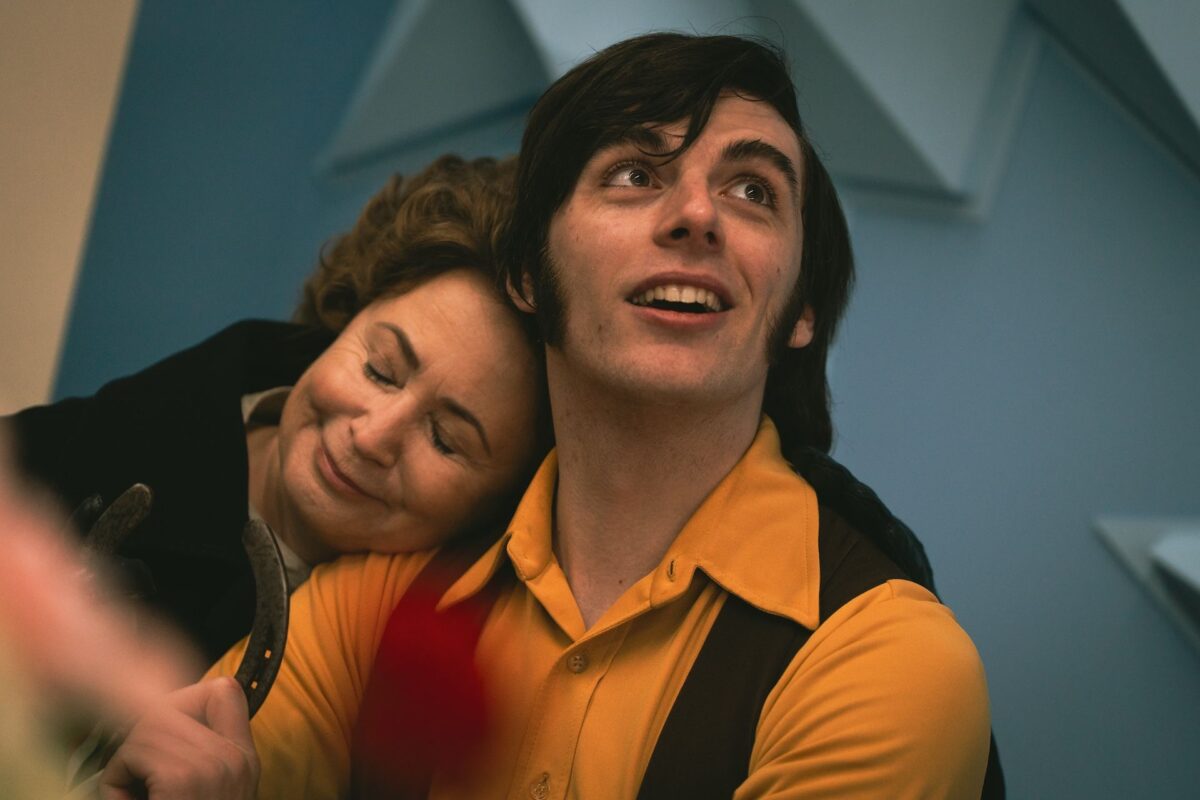
Both: Milan plays a character whose story is inspired by his own life experience. In Milan, we found someone who truly believes in the circumstances his character finds himself in. For us, that is the definition of a good actor. Once we explained the scene to him – who he was interacting with and what the situation was – Milan believed in it completely. Sometimes we imagined a scene being played one way, but he surpassed our expectations. He understood his character (as one would expect) and knew how this character behaves authentically in a given situation and how he interacts. We were very happy with him, and fortunately he and his family were happy with the film as well.
Why did you choose the title 33 Steps?
Both: The title refers to the distance between Milan’s home and the place where the attack occurred. We did not emphasize this in the film and were saving it for interviews.
What are your plans for the film after its world premiere at KVIFF?
Both: We would like to screen it in prisons, and we have recently started discussions with the Prison and Court Guard Service in Slovakia.
Interview conducted by Barbara Nováková (National Cinematographic Centre of the SFI).
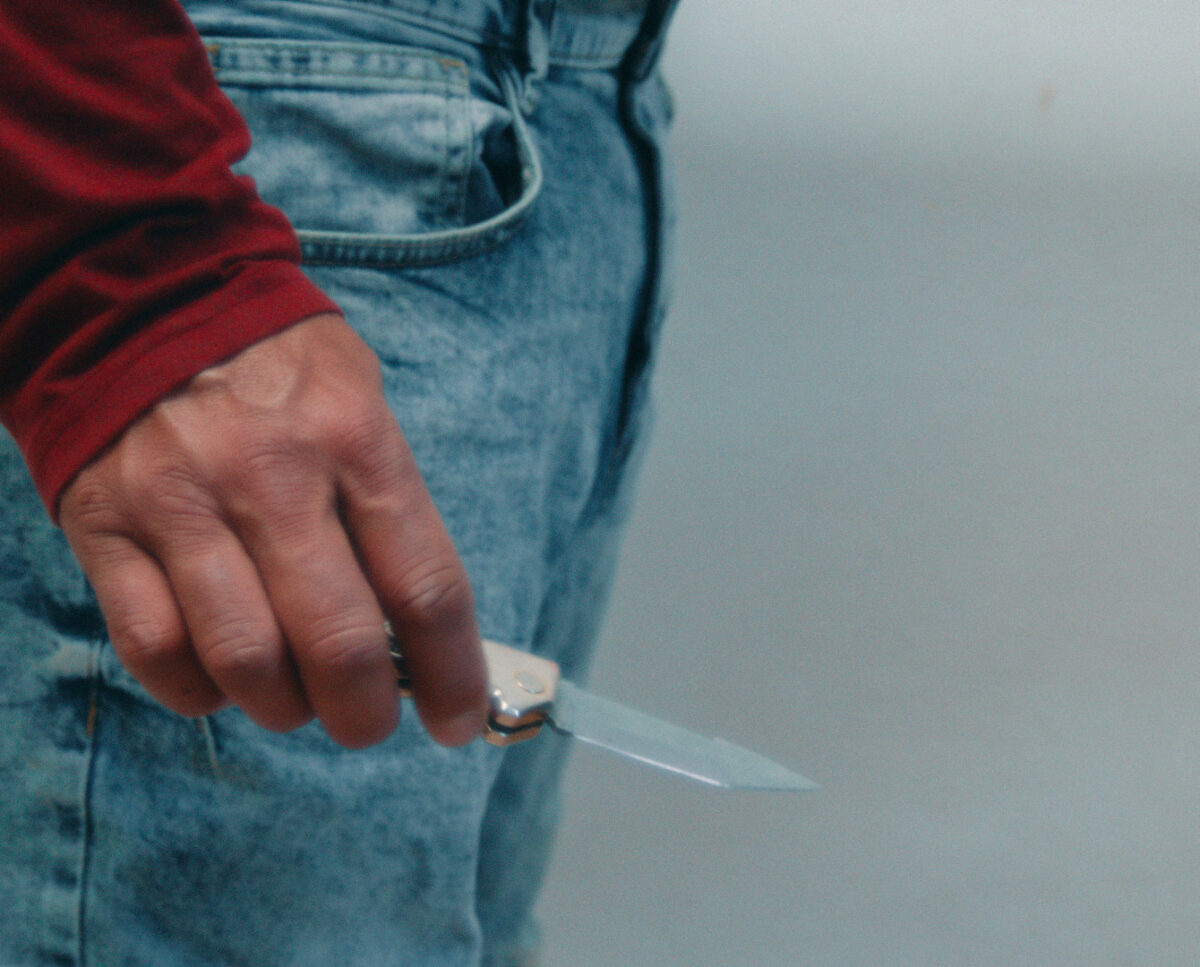
33 Steps
Proxima Competition
Screenings:
July 4 | 16:00 | Cinema C (Press & Industry)
July 4 | 19:00 | Karlovy Vary Theatre (world premiere)
July 5 | 15:00 | Cas Cinema
July 6 | 13:00 | Lazne III
July 7 | 14:00 | Cinema B